2009.06.30

Æsthetics, Usability and Determining Who’s Boss.

Æsthetics and usability go hand in hand. Because many people are visual beings, they function better when they work in a beautiful environment. And that extends to computing. So those two go together.

In typography this is pretty obvious whenever you’ve got to use (even for a short while) a Windows machine: Cleartype, now the default anti-aliasing technique employed by Microsoft, is a hideous, ugly and largely unusable (to me at least) hinting/anti-aliasing technique used by Redmond that’s supposed to make text more legible. I’m writing ’supposed’ because it doesn’t (at least for me); it never did, but in the process it does succeed into making text look extremely ugly.

What’s surprising is not that Microsoft is not ‘getting’ it. No, that’s pretty well known; it’s no accident that Apple has gone with a much more reasonable approach in OS X (which is, to my eyes, equally legible, but far more beautiful). Which is why you can actually have far superior hinting and still retain the original glyphs, as is evidenced by Adobe’s Reader. Which is why even freetype provides excellent anti-aliasing [even if it's still bugridden and at the same time many linux distributions insist on turning on full-hinting, probably the worst choice they could make].

What is really surprising here is this:

Microsoft Office and Internet Explorer will default in some cases to using ClearType rendering. Some applications that use fonts tuned for ClearType and not bi-level rendering may choose ClearType rendering to maintain the benefits of the font designs. Some applications need higher precision glyph widths like sub-pixel positioning or “natural width ClearType,” and would reflow if they were changed to bi-level or grayscale rendering. Other applications like Adobe Reader have their own built-in text rendering engine that is independent of the Windows graphics platforms. Likewise, platforms like Java on Windows also use their own rendering techniques.

Ok, so you can have applications that have their own rendering engines and don’t want to do anything with ClearType (understandable). But having everyday applications such as Internet Explorer or Office applications being capable of overriding user preferences, only because Microsoft insists on doing simple things in such a complex, backwards manner is perplexing. It’s one thing being clueless, inept, having an ingrained, institutional one might say, sense of kitsch æsthetics, creating fonts for a totally inferior technology and in the process creating a bunch of problems throughout your platform and it’s a wholly different thing when those things turn into an inability to honour user preferences. Totally mad design decisions and a poor system design on the whole.

Having said that, up until lately Apple had its fair share of problems with typography on OS X (incomplete support for non-roman characters, OpenType issues, etc.) and linux is in a laughable state with pango, fontconfig and friends failing to provide a solid foundation that would support high-end uses in the publishing industry (a nice example would be the total clusterfuck that results when you try to use commercial fonts with many styles). But at least there no one pretends that they know better; they move forward, try and fix what’s wrong and create better software; Microsoft, on the other hand, seems to be doing exactly the opposite, at least as far as typography is concerned.

comments


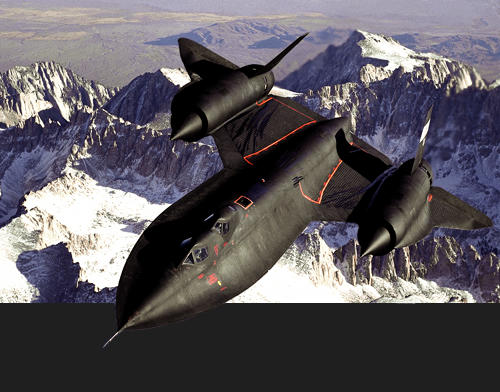
» Compared with the Blackbird, they are hardly art at all.

SR-71 Blackbird.

And history the planes have become. However advanced they were, time and technology overtook them; in 1990, as satellites appropriated their mission, operational flights ended. Today’s unmanned orbital droids may represent the state of the art. But compared with the Blackbird, they are hardly art at all.

A quick look back at the legendary SR-71 Blackbird. [via kottke]

comments

» Slammin’ Magnatune [For No Good Reason]

For some unknown reason someone [or a group of people] have been hitting Magnatune hard with credit card fraud, to the point where the company was dropped by their payment processor.

This is a great example of how a good company [and one that helps artists worldwide] gets harassed by ‘criminals’ only to find itself punished by the very same people whose inadequate systems are responsible for the mess in the first place: Visa. John Buckman reports that Magnatune saw ⅓ of its subscriber base disappear due to this change [Magnatune is now depending on PayPal for its credit card transactions and the fact that each payment goes via another entity makes it slightly harder to charge the recurring fees subscriptions bring, without asking the users to register with PayPal etc].

As regular readers may have noticed, I am a great fan of Magnatune; both ethically and artistically I find their effort and business commendable and I have, over the years, found several excellent albums from that company. I hope that things get better for them soon. As a sidenote, I really wonder why someone would hit Magnatune in this manner. Clearly it’s not aimed at getting hold of the music, given that you can get the tracks for free anyway…

comments

» No Upgrades Here.

I’m not sure if this is a political stunt by Microsoft, or if they are really going to go forward with it. If they are it is insane: By not giving Europeans the capability to upgrade their operating system, like it has done for more than twenty years and at the same time trying to put the blame on the European Commission for doing so (while not providing any specific reasons for doing so), Microsoft is really shooting itself in the foot; from a PR point of view it’s a pretty bad strategy that’s almost certainly going to backfire. At any rate, I feel so sorry for all those people that are going to want to upgrade from a poor OS like Vista to a mediocre one like Windows 7 and having to do a full reinstall [let alone pay the premium of getting the full version].

comments

» Not so Heavy and definitely not Crap.

Definitely still Taiwanese though. =)

Of course, it’d be too early to tell whether the Hero, or, indeed, Android will become a success, but if anything, the new HTC Hero will be remembered as the device that started the custom Android experience era.

From the company that, according to Microsoft’s own statements and some simple arithmetic, makes 80% of Windows Mobile handsets comes a beautiful ‘port’ and of its popular TouchFlo interface but with a twist. It may be true that the Hero only sports skin-deep improvements to Android, but with the platform rapidly evolving and with 18 to 20 Android powered devices due by year’s end, it is already looking like a fantastic alternative to the ageing, craptastic Windows Mobile platform that HTC has depended upon since its earliest days.

If anything, contrary to Nokia, HTC seems to ‘get’ how important the User Experience is.
comments

» We don’t have 64 bit support for Linux in 3.5

That’s for Tracemonkey, the new, somewhat faster javascript engine that’s included with Firefox 3.5. Don’t be alarmed then when Firefox 3.5 performs only marginally faster on javascript heavy sites than Firefox 3.0. No 64bit support for the new javascript engine, on the platform where Firefox pretty much dominates. In my view, that should’ve been Mozilla’s first priority on Linux: many linux users choose 64bit because they are not hindered by missing drivers or applications. Linux users are typically more computer-savvy than your average windows or OS X users and could serve as good guinea pigs for a 64bit version of Tracemonkey. In any case, irrespectively of operating system, Tracemonkey ‘feels’ slower than Nitro (or v8) in 32bits too, but giving 64bit linux such a low priority is somewhat dumb, especially given the ever increasing interest and market share for 64bit linux among linux users (after years of requests Adobe released its exceptionally stable 64bit flash player for linux a few months ago). Hopefully a 64bit version of tracemonkey will be included in one of the minor upgrades before 2010, but I feel like Mozilla has made a mistake here.

Update: It seems that there is no 64bit Tracemonkey code, linux or otherwise, which is surprising; I am not exactly clear as to what prevents them from releasing a 64bit version.

6 comments

» They’ll never learn.

The Nokia N97 is out. And what a disappointment this is. Still great hardware features. Still the same mediocre system software, the poor usability that comes ‘for free’ with Symbian, and average industrial design [from the moment a phone is that bulky, it's bad --- it doesn't matter how many Mpixels its camera has or what the resolution of its display is]. I find the idea of a resistive touchscreen dated and wrong, although I understand why Nokia might have chosen it over the capacitive kind that everyone else is currently using, given the subpar feel that its software has as a touch interface and the possibility for the need of a stylus. I’m really surprised however: given the success of the iPhone, the huge challenge that Android is going to pose to low and mid-level phone manufacturers (especially given how customisable it is) in the near future and the dwindling profits, mind and marketshare, why on earth isn’t Nokia caring more about the user experience?

1 comments

» Και είναι ακόμη Ιούνιος..

Όπως είπε φέτος υπάρχουν 3.500 πυροσβέστες λιγότεροι ενώ οι μόνιμοι δεν έχουν μέσα ατομικής προστασίας.

3,500 λιγότεροι πυροσβέστες [από πέρυσι;], μόλις δυο χρόνια μετά τις καταστροφικές πυρκαγιές σε Πάρνηθα, Εύβοια και Πελοππόνησο και με τη περίοδο των πυρκαγιών να έχει ήδη ξεκινήσει για τα καλά. Και όλα αυτά σε μια χώρα 11 εκατομμυρίων που τουλάχιστον καταφέρνει επιτυχώς να επαναπροσδιορίσει τον όρο ‘ανικανότητα’ και ‘απάθεια’, με περισσότερους δημόσιους υπαλλήλους από τη Γερμανία των 82 εκατομμυρίων και τη Βρετανία των 65 εκατομμυρίων.

2 comments

You're settling for good when there's awesome.  Upgrade to Firefox 3.5!